
Lincolnshire MP criticises plans for smaller version of new council
An MP has criticised a proposal for a slimmed down new council – saying having a smaller number of representatives goes against the ‘principle of democracy’.
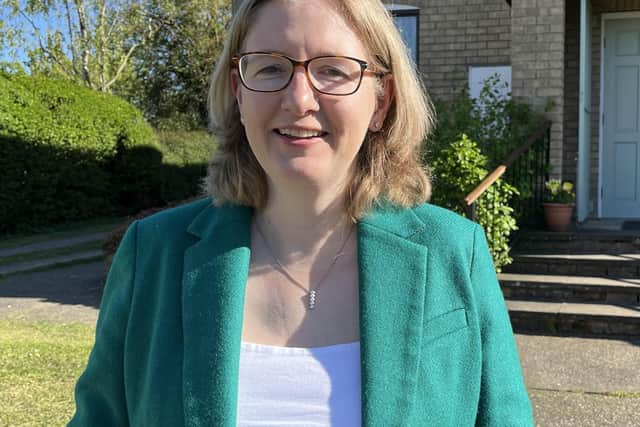
Sleaford and North Hykeham MP Dr Caroline Johnson (Conservative) said that the City of Lincoln Council’s suggestion to the Government that it wants just 47 councillors for a new authority – down from a proposal of 65 – would mean some areas are ‘less well represented’ than others.

But City of Lincoln Council leaders have denied this and say that this proposal would ensure that the new authority reflects the needs of different communities.
The Government has decided to create an extended Lincoln council, with the rest of the county merged together into one authority.
But Dr Johnson, whose constituency will stretch into both new councils, has criticised these plans.
She said: “The way they’ve done it, they want to include deprivation as a marker so that you can get more votes, more proportional representation if you’re in an economically deprived ward than if you’re not.
“The principle of democracy is that we’re all equal and that your vote should count the same – so I don’t agree with that proposal and I think my constituents would be very concerned about it.”
Dr Johnson went on to say that cutting the proposed number of councillors would result in a ‘hugely wide variation’ in local representation.
She added: “People’s votes should count equally and the local government reform should not be an opportunity to change the representation so that people in some areas are less well-represented than others in a way that is potentially politically beneficial for the proposee.”
Dr Johnson also told the Local Democracy Reporting Service that she believes that local government reorganisation is a distraction from delivering public services.
She added: “All this is taking away from time delivering services and money delivering services.
“I’d be concentrating on improving the services and making them more efficient rather than changing the organisation of the council, particularly from our district council’s perspective in North Kesteven, it has a good representation with the public.”
Dr Johnson also warned that the changes are unlikely to save money.
She said: “I think spending time reorganising is expensive and has both a financial cost and an opportunity cost when staff are spending their time reorganising and making people redundant and making new letterheads and all this sort of thing.
“But also while they’re doing all of that, they’re not able to focus as well as they were before on the services that they’re trying to deliver for the public.”
Dr Johnson believes that many of her constituents are not pleased with the changes to local councils.
She added: “I’ve had lots of correspondence saying people don’t like local government reform, particularly those that are being put into the central Lincoln area that feel they’re rural areas.
“They’re concerned that council tax will go up. They’re concerned about services not being delivered.
“They’re concerned about the distraction and opportunity cost and the fact that people are doing that rather than looking after them.
“They’re concerned that the services of Lincoln don’t have the good reputation that the services of North Kesteven do.
“There’s also concern that the boundaries are a bit of an odd shape. It all seems to be done in a rushed way without thinking it through.”
Deputy leader of City of Lincoln Council Donald Nannestad (Labour – Castle) said: “The city council’s proposal for local government reorganisation in Lincolnshire included 47 councillors for the new unitary authority serving the expanded Lincoln area.
“The city’s proposal was selected by the Government as the agreed way forward for reorganisation in the county.
“The Government has since suggested increasing the number of councillors to 65.
“We have asked the Secretary of State to reconsider this and revert to our original proposal, which aligns more closely with similar urban unitary councils such as York, Derby and Swindon.
“That said, we remain open to a larger number of councillors if that is the Government’s preferred approach.
“However, it is vital that councillor representation across the new authority is allocated fairly, reflecting the differing needs of communities and recognising the significant urban deprivation and complex challenges faced in some areas.”
A spokesperson for the ministry of housing, communities and local government said: “All councils have been asked to provide representations on warding and councillor numbers for the Structural Changes Order, which is still in the process of being finalised.”