
Pause on Lincolnshire councils reorganisation to gain ‘legal clarity’ says minister
The Government has confirmed a series of council reorganisations will go ahead, but Lincolnshire’s will be paused to check the legality of the decision, after a review of the process was called when Andy Burnham became Prime Minister.
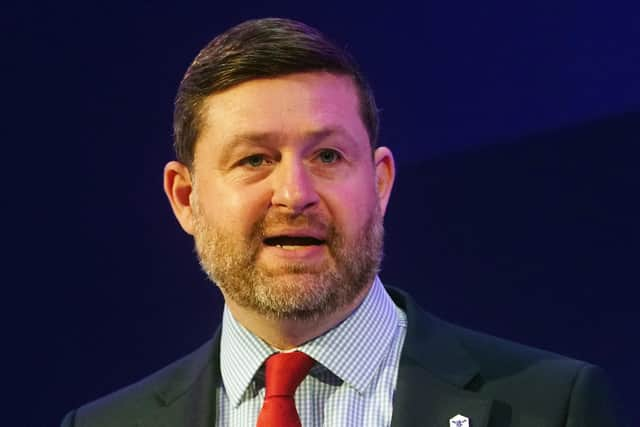
Local government minister Jim McMahon said the review had found the criteria for making the decisions around which councils would be created or merged was “robust”, but also announced some would be paused.
He said two unitary councils will be created across East Sussex and Brighton and Hove, one unitary in Gloucestershire, three in Oxfordshire, and two in Warwickshire and two in Worcestershire.
Mr McMahon said: “These decisions are for the same council structure that were previously announced in July, but they are new decisions following full and thorough considerations.”

Meanwhile he said decisions on Derbyshire and Derby, Devon, Plymouth and Torbay, Hertfordshire, Kent and Medway, Lancashire, Blackburn with Darwen and Blackpool, Leicestershire and Leicester and Rutland, Lincolnshire, North Lincolnshire and North East Lincolnshire, and Nottinghamshire and Nottingham, and Staffordshire and Stoke-on Trent would be referred for “legal clarity”.
The changes are part of the Government’s flagship local government policy announced by Sir Keir Starmer’s government.
Under the government shake-up various proposals for changes and mergers had been proposed by the local authorities, but under the government’s favoured plan Lincolnshire was to see its top two tiers of councils abolished and merged into two unitary authorities – one covering Lincoln city and parts of West Lindsey and North Kesteven, the other covering the rest of Lincolnshire in a bid to streamline decision-making and services.
The previous proposals were announced by former communities secretary Steve Reed earlier this year, but reviewed by Labour in September.
Lincolnshire County Council and South Kesteven District Council had both taken steps to legally challenge the decision.
Mr McMahon said: “I want to be absolutely clear that this is not a reflection of the work underpinning those proposals.”
The areas remaining for council reorganisation will have “an outcome by early next year”, Mr McMahon said.
Speaking in the Commons, the local government minister said: “We will move faster where we can, and some of the remaining areas may receive an outcome decision before others.
“I commit to coming back to the House with updates for another set of areas by Christmas, and every area will have an outcome by early next year.
“Turning to local elections, as we set out in September, elections scheduled for May 27 will now go ahead to existing councils.
“This means that elections to new councils will be May 2028, followed by a vesting date of April 2029.”
Eamonn O’Brien, chair of the Local Government Association, said councils were “frustrated” by the process and needed “urgent clarity”.
Mr O’Brien said: “While today’s announcement provides some certainty for some areas, many councils remain frustrated by the situation they have been placed in. All councils affected need urgent clarity on next steps and how costs already incurred will be met.
“Councils have already committed significant time, capacity and resources to this process, and all costs must be fully funded. Councils cannot be expected to bear the financial and staffing consequences of decisions beyond their control.
“As the review progresses, we urge Government to provide clarity on the process, decision-making framework, and legal position.
“The review also needs to consider the impact on essential services, taking account of the cumulative effect of wider reforms, and avoids delaying devolution where proposals can strengthen local leadership, deliver value for money, drive growth, and improve outcomes for communities.
“Moving forward, there needs to be a reset in the relationship between government and councils on LGR, with local government fully engaged in shaping decisions from the outset.”
Jonathan Carr-West, Chief Executive of the Local Government Information Unit, said: “Today’s announcements on LGR are extremely disappointing. While there is clarity for five areas, there are 15 more that remain in limbo. Councils in all of those 15 areas have put serious time, money and goodwill into this process, at Government's urging. All that effort feels in jeopardy.
“Government designed a process that invited contestation. It now appears able to proceed only where there is none. That is a fragile basis for a national reform programme."
He added: “Meanwhile, the pressures haven't paused. May's district elections could return administrations with very different views from those that endorsed the business cases. Some districts face real questions about their finances well before a 2029 vesting day.
“Devolution and LGR are now clearly decoupled. But proceeding on devolution doesn’t negate the need for a clear roadmap and timetable on LGR, certainty on funding, and honesty about what can realistically be delivered in this parliament."