
Four possible futures for the Lincolnshire coast as it seeks billions for flood defences
Four dramatic visions for Lincolnshire’s East Coast are being drawn up as officials seek billions of pounds to protect it.
The majority of the sea defences from Mablethorpe to Skegness, which 60,000 people depend on, are expected to fail by 2040.
Lincolnshire County Council is working with the Environment Agency and others to build up a case for huge sums of government investment in them.
The group is required as part of the bid to lay out various scenarios, from a brand new set of defences all the way to complete abandonment.

Chris Miller, the council’s head of environment, told a meeting on Friday (October 23) that the coast was facing pressure from “ageing assets, rising sea levels, intensification of storms and limitations of funding.
“We simply cannot just retain the status quo. Every scenario requires significant transformation.”
Chaotic decline
The worst possible scenario which would be put before the government would be doing nothing at all.
In this scenario, the majority of the sea defences would have reached the end of their life by 2040, which Mr Miller said would lead to “chaotic decline”.
The devastating 1953 floods are still remembered by Skegness, when water breached two miles inland.
Mr Miller warned that there would be nothing to stop future storms if the defences are abandoned, with towns potentially seeingfloods of up to 2.5 metres at high tides.
Coastal representatives were dead set against the idea, with Skegness Councillor Adrian Findley saying: “I will never support a bid that surrenders land of Lincolnshire to the sea.”
Rebuilding the defences
The best-case scenario would see a new set of higher and wider fortifications built to protect the coast for decades to come – but even this would come at a cost.
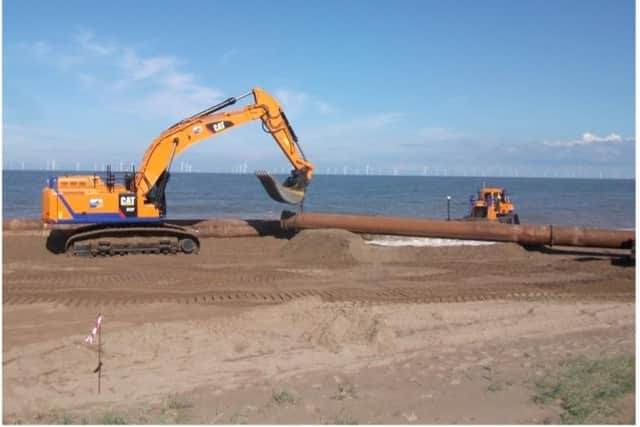
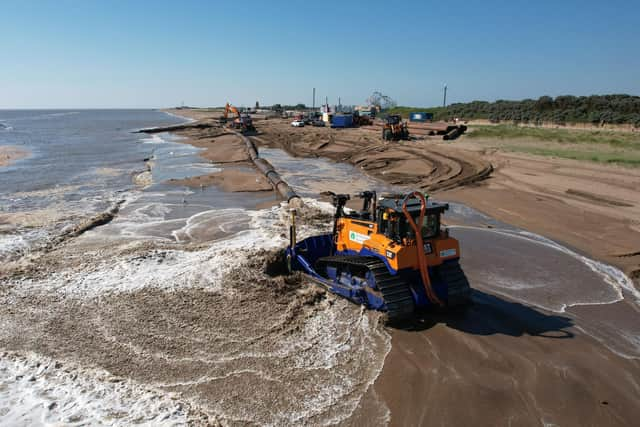
East coast beaches are maintained by ‘nourishment’ – pumping offshore sand onto the beach – which costs the government £15million per year.
This helps to protect the coast as well as drawing thousands of visitors to the seaside.
Mr Miller warned that with new sea defences in place, the coast would be “highly unlikely to retain the beach” unless it was financed by someone else.
Councillor Cain Parkinson said: “If there’s no beach in Mablethorpe or Skegness, the tourism value disappears quite significantly.
“We will see more deprivation in already deprived areas from the loss of tourism – that’s something we need to be prepared for.”
Any new defences would also likely be built behind the current ones, changing the face of the seafront further.
Surrendering some of the coast
The two middle options would be various levels of “realignment” – effectively redrawing where the sea ends and the land begins.
These would protect “some of the coastline but not all”, Mr Miller told the committee, meaning homes, farmland and businesses would be displaced.
Councillor Paul Wimhurst described this as “the complete decimation of our coastline. Saying ‘Let Lincolnshire flood, we don’t want to pay for it’ isn’t right.”
The committee was told that some parts of the coast were already struggling to get insurance due to the growing flood risk.
The partnership hopes to draw up a masterplan for new defences by 2028, and secure government funding by 2036.