
Review into January 2025 floods finds that decommissioned pumps could have helped cut risk, but only in Boston
A review of flooding that took place in Boston and beyond last year has found that decommissioned equipment could have reduced water levels in the town had it been operational.
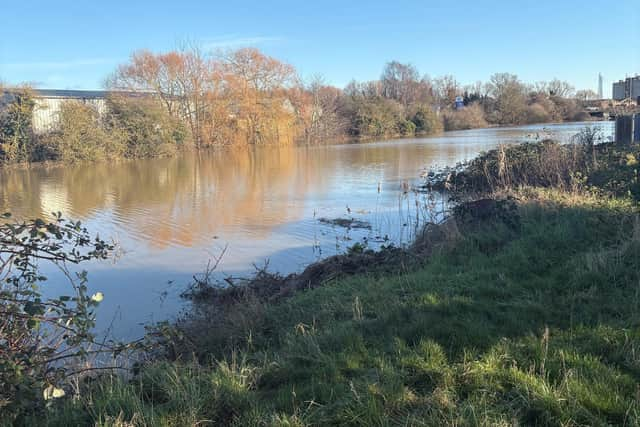
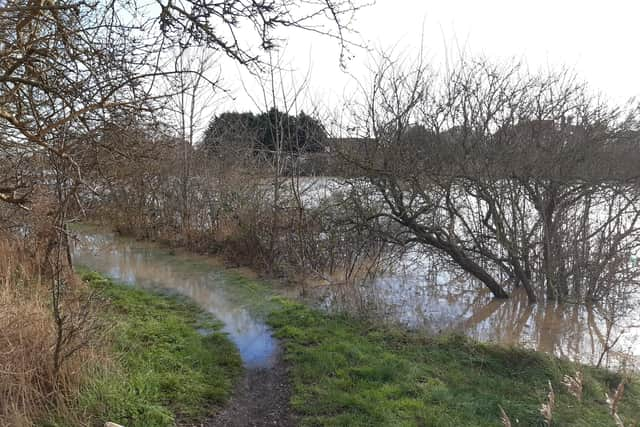
In January 2025, dozens of properties in Boston were flooded after large amounts of rain fell on frozen, or near-frozen, ground across the South Forty Foot Drain catchment.
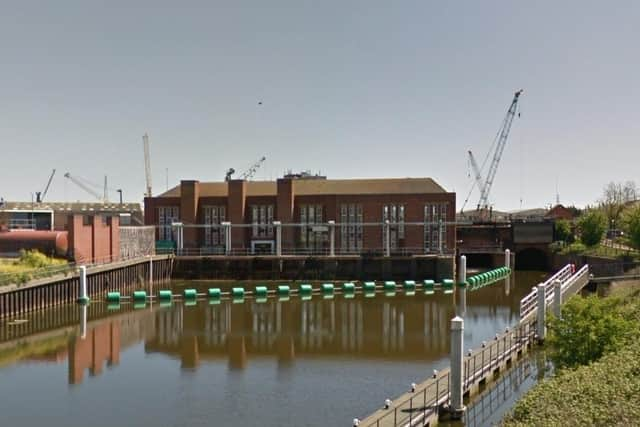
Questions were subsequently asked over what impact the pumps at Boston’s Black Sluice Pumping Station would have had if they were still working.
An analysis of the event, conducted by consultants Mott MacDonald, has gone on to find that the equipment could have reduced water levels locally.

“The greatest reduction in water levels occurs at Black Sluice, immediately east of Wyberton West Road, with the effect gradually decreasing further upstream,” it noted.
It added, however, that the benefit would not stretch to Billingborough, Pointon, or Swaton, where homes were also flooded, and concluded the findings ‘do not identify new evidence that would make reinstating the pumps a proportionate or economically viable flood risk management option’.
The review also said that in Boston water levels and overtopping risk could have been cut through ‘further reducing Internal Drainage Board (IDB) pumping’.
IDBs are authorities set up to control water levels and manage flood risk. The pumping, here, is the movement of water from the fens into the South Forty Foot Drain and its tributaries.
It does note, though, that, in practice, IDB pumping is ‘scaled back as much as possible’.
A spokesman for the Environment Agency (EA) said: “We are considering a number of options to reduce the risk of flooding for communities in the area, including flood storage and other ways of holding flood water back which build on flood schemes that are already in place.
“No single measure will remove flood risk entirely, and we will continue working with Black Sluice Internal Drainage Board and local communities to identify the most effective options, taking account of practical, environmental and funding considerations.”
The Black Sluice Internal Drainage Board said the review ‘provides an important evidence base for understanding the causes of the flooding experienced during January 2025 and helps inform future investment and flood risk management decisions across the catchment’.
A spokesman said: “The modelling confirms that the flooding resulted from exceptional catchment-wide conditions, with frozen and saturated ground generating extremely high rates of runoff into the drainage network.
“Crucially, the review found no single operational decision, infrastructure failure or organisation responsible for the flooding. Instead, the event was driven by a combination of extreme weather and the resulting volumes of water entering the system over a prolonged period.”
The board said it welcomes steps being taken by the EA to manage local flood risk and that it ‘looks forward to supporting the development of solutions that are both effective and deliverable’.
“As a Board, we have consistently maintained that flood risk management decisions should be based on robust evidence and whole-catchment thinking,” the spokesman said. “This review reinforces the need for continued partnership working between the Environment Agency, Internal Drainage Boards, local authorities, water companies, landowners and communities to improve resilience to increasingly extreme weather events.
“The Black Sluice Internal Drainage Board remains committed to maintaining and investing in the drainage infrastructure under its control whilst working with partners to identify opportunities for future flood risk improvements across the catchment.
“We recognise the impact these events have had on affected residents and will continue to support efforts to deliver practical, evidence-led solutions for both Boston and the wider South Forty Foot catchment.”