
Coastal railway loco brought back in wave of 1960s nostalgia

It’s 1960 again at the Lincolnshire Coast Light Railway as enthusiasts have resurrected an old favourite locomotive to remember their early days.
The LCLR became the first heritage railway in the whole world to be built by enthusiasts, running its pioneering train from North Sea Lane to Beach station in Humberston, near Cleethorpes, on August 27, 1960.
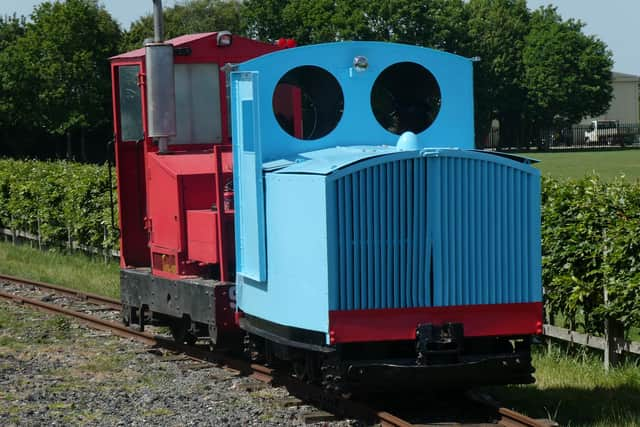
The heritage line, now based in the Skegness Water Leisure Park, had originally used a 1926 Simplex diesel locomotive with a body fitted by a sheet metal firm based on Grimsby Docks and painted in a colour usually associated with fishing vessels to be their first working loco on the original heritage line.
In that first three weeks of operating, the little loco, officially built a hundred years ago by Motor Rail Ltd of Bedford to their Simplex design (but believed to date back to the First World War and 1918) hauled trains carrying 8,000 passengers and hauled a whopping 60,000 people in the first full season of 1961.
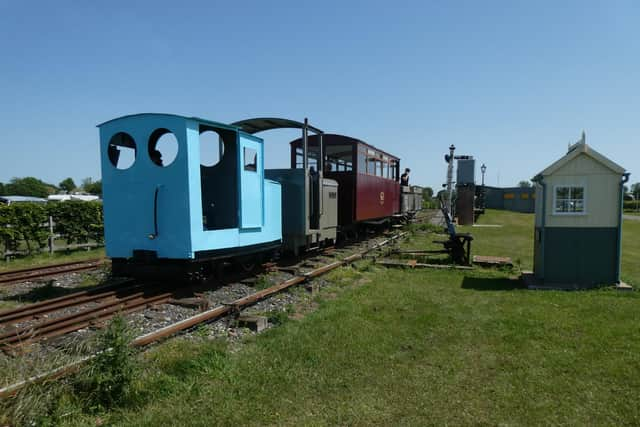

It was eventually displaced by other Simplex locos and the steam engine Jurassic, dropping out of regular use and its distinctive livery was replaced by darker shades of blue. Glazing was fitted to the windows to keep out the icy North Sea blasts, the exhaust pipe was moved and its nameplates “Paul” were attached.
Now it has successfully completed its first test runs on a passenger service from Walls Lane to Seathorne Bank after winter months spent putting it back as far as possible to 1960 condition, made possible by the work of volunteers and the generosity of the Hull firm of marine and farm paint manufacturers, Teal & Mackrill Ltd. They gave the LCLR their original Teamac ‘Seine Net Blue’ paint shade, traditionally associated with marine vessels, but this enabled the loco to be returned to the livery it was finished in on its pioneering run in 1960.
Richard Shepherd, chairman of the LCLR’s Historic Vehicles Trust said: “It brought tears to my eyes to see it back running in the original colour, after all these years. There are still active volunteers on our railway who remember it – and drove it – in that colour back in the early 1960s”.
Stuart Yates, who led the project said: “Returning the loco to its 1960 condition as near as possible was only possible thanks to the generosity of Teal & Mackrill Ltd. It enables us to tell an important story of how narrow gauge railways in Lincolnshire not only served agriculture and industry, but also provided transport to the holiday industry – as the original LCLR was more public transport than heritage railway. It’s part of the story of how we took
our holidays in the 1960s.
“We hope to use the loco in our Narrow Gauge At Work event on Friday and Saturday June 19 and 20, along with our other locos and vintage rolling stock”.
The pioneering train bucked a trend to close railways in Lincolnshire at that time. By then, three years before Dr Richard Beeching’s “Reshaping of British Railways” which spelled the death knell for many lines, significant others had already closed to passengers or were about to, namely Louth-Mablethorpe; Horncastle – Woodhall Junction; Scunthorpe – Whitton; Bourne – Sleaford; the Midland & Great Northern system linking Spalding, Bourne, Holbeach and Sutton Bridge to Norfolk and the Midlands; Isle of Axholme Joint Railway; Alford & Sutton Tramway; Louth – Bardney via Wragby; the Spilsby branch; the RAF Cranwell branch; Nocton Estates Railway and other “potato railways”; Little Bytham – Edenham; Stamford – Essendine.